


Table of Contents
Belgium continues to attract international students for its multilingual education system, competitive tuition, and strong academic reputation across Europe. The country’s universities offer English-taught programs, access to public research institutions, and degrees recognized throughout the EU.
While several institutions have global partnerships and campuses abroad, a few stand out for being deeply rooted in Belgium with consistent appeal to international students. Below is a summary of four universities located exclusively in Belgium, followed by a broader look at other reputable institutions with a strong presence in the country.
Top Universities in Belgium
Belgium is home to several universities that operate solely within its borders. These institutions offer internationally recognized degrees while remaining firmly rooted in Belgian academic culture. They are especially appealing to students seeking a focused, community-driven experience in a specific region of the country.
1- UCLouvain
- Location: Louvain-la-Neuve, Belgium
- Founded: 1425
- Institution Type: Public
- Global Ranking: #175 (2025)
- Total Students: 30,957
- International Students: 5,689
- Academic Staff: 1,862
- Master’s Programs: 30
- Scholarships Available: 50
- Satisfaction Score: 4.0/5
- Admission Process Rating: 4.2/5
UCLouvain is one of the oldest universities in Europe, with a strong identity built around academic excellence, research collaboration, and social engagement. Located in a purpose-built university town just outside Brussels, the university offers a complete campus experience with integrated housing, culture, transport, and student support. Its programs are taught in French and English, attracting a wide mix of students from across Europe, Africa, Asia, and the Americas.

Academic Breadth and Faculty Structure
The university spans 14 faculties and schools, including engineering, law, economics, medicine, architecture, and theology. It provides a wide academic offering without becoming overwhelming, and students benefit from clear departmental structures and interfaculty collaboration. English-language instruction is especially well-developed at the Master’s level, with strong administrative guidance for course selection, scheduling, and thesis supervision.
Quality of Teaching and International Recognition
Teaching at UCLouvain is structured but flexible, with a mix of lectures, lab work, and applied learning. Faculty members are active researchers, and courses often integrate current developments in the field. UCLouvain’s management school holds EQUIS accreditation, and several programs are ranked across global subject listings. International guest lecturers, exchange programs, and summer schools add to the global perspective.
Learning Environment and Campus Setting
Louvain-la-Neuve is designed around the student experience. The town’s pedestrian center, modern libraries, on-campus residences, and public spaces make it easy to settle in and stay focused. The university’s scale allows students to access advanced labs and research tools while still receiving academic support in small groups when needed. Local amenities, health services, and train connections to Brussels are all within walking distance.
Student Life and Support Services
UCLouvain supports international students with a structured onboarding process, visa and housing assistance, and French language support. Student organizations are active across academic, cultural, and political spheres. The university’s residence system is well-established, and private housing nearby remains relatively affordable.
What Students Can Access
- Welcome desk and visa help for international students
- Student-run cafés, cultural events, and debate societies
- Sports facilities and fitness classes through the university center
- On-campus health clinic and counselling services
- University-managed student housing and rent advice
Students report high satisfaction with the admission process and the ease of navigating academic systems once enrolled. Louvain-la-Neuve’s compact layout and student-first design help students quickly find routine and rhythm.
Sample Master’s Programs (Full-time, On Campus)
- Biomedical Engineering
- Chemical and Materials Engineering
- Civil Engineering
- Electrical Engineering
- Electro-mechanical Engineering
- Mathematical Engineering
- Mechanical Engineering
- Nanotechnologies (1 year)
Tuition Fees (Approximate, for International Students)
Approx. £2,200 per year
UCLouvain students can apply for a wide range of external scholarships, including both need- and merit-based awards. These are open to various nationalities and subject areas. These are:
- Master Mind Scholarships (Government of Flanders)
- Erasmus Mundus Joint Master’s
- DFL Scholarship Program (Daughters for Life Foundation – need-based)
- Conference Interpreting Bursaries (European Commission – up to €33,600)
- Moving Mates, IvyPanda, and Education.com grants
Students are encouraged to review eligibility and deadlines early, as funding levels and requirements vary by provider.
Research and Global Outlook
UCLouvain is highly research-active, with interdisciplinary centers spanning sciences, humanities, and medicine. It collaborates with local and international institutions and balances both fundamental and applied research priorities. Students have opportunities to assist in lab-based or policy-oriented research through structured programs, faculty mentorships, or thesis tracks.
2- Vrije Universiteit Brussel (VUB)
- Location: Brussels, Belgium
- Founded: 1834 (as part of ULB), established as VUB in 1970
- Institution Type: Public
- Global Ranking: #201 (2025)
- Total Students: 22,800
- International Students: 5,350
- Master’s Programs: 33
- Scholarships Available: 50
- Satisfaction Score: 4.0/5
- Admission Process Rating: 4.4/5
VUB is a public research university located in Brussels, known for its commitment to academic freedom, critical thinking, and independent inquiry. Originally part of the Université Libre de Bruxelles (ULB), VUB became an autonomous Dutch-speaking institution in 1970. Its urban campus places students within walking distance of European Union institutions, international NGOS, and multilingual communities, making it especially attractive to globally minded students.

Academic Breadth and Program Structure
VUB offers a focused but diverse range of Master’s programs, particularly strong in engineering, political science, communication, and applied sciences. Instruction is in English for most graduate programs, and students benefit from small class sizes, direct access to faculty, and a modular academic calendar. The university’s teaching style is highly interactive, encouraging participation and collaboration.
Teaching Approach and Quality Assurance
Teaching at VUB is designed to support independence of thought and real-world problem-solving. Professors often bring ongoing research into the classroom, while project-based learning and group work are common in technical and policy programs. All degrees are fully accredited by the Dutch-Flemish Accreditation Organization (NVAO), and the university runs an internal quality control system to monitor course effectiveness.
Urban Campus and Social Integration
VUB’s campus in Brussels blends academic and city life. Facilities include modern labs, green study areas, and sports centers. Students live either in campus housing or in shared apartments across the city. Access to public transport, international events, and policy forums makes VUB particularly well-suited for students interested in diplomacy, advocacy, or urban policy.
Student Life and Support Services
VUB has one of the strongest international student support systems in Belgium. Services include visa assistance, housing support, health insurance coordination, and extensive orientation programming. Student life is active, with dozens of clubs, regular international nights, and sports events. The university also emphasizes well-being through mental health services and on-campus healthcare.
What’s Available to Students
- Dedicated international student office
- Student-teacher interaction rating: 4.1/5
- High diversity rating: 4.4/5
- Full access to fitness centers and intramural sports
- Subsidized housing and public transport support
- Online course platforms rated 4.0/5 by students
Sample Master’s Programs (Full-time, On Campus)
- Architectural Engineering
- Biomedical Engineering
- Chemical and Materials Engineering
- Chemistry
- Civil Engineering
- Electrical Engineering
- Electromechanical Engineering
- Nuclear Engineering (1-year, available part-time)
Tuition Fees (International Students)
Approx. £2,400–£3,600 per year
VUB students can apply for both university-supported and external scholarships. These range from full tuition coverage to smaller awards based on merit, financial need, or program type:
- Master Mind Scholarships (Government of Flanders)
- Erasmus Mundus Joint Master’s
- Scholarships for Interpreting Students (European Commission – up to €33,600)
- ServiceScape and Moving Mates Scholarships
Deadlines and amounts vary, so applicants are encouraged to explore multiple options early in the application process.
Research and Global Outlook
VUB promotes interdisciplinary, socially relevant research. Faculty projects address topics such as climate policy, health technology, and urban governance. The university collaborates with other European institutions and leads several Horizon Europe projects. Students at the Master’s level often have access to applied research or policy-related internships as part of their thesis or course components.
3- Université de Mons (UMONS)
- Location: Mons, Belgium
- Founded: 2009 (merger of institutions dating back to 1837)
- Institution Type: Private
- Global Ranking: #601 (2025)
- Total Students: 7,715
- International Students: 1,344
- Academic Staff: 316
- Master’s Programs: Multiple (primarily in science, engineering, education, and language studies)
- Scholarships Available: 50+ (via university and independent providers)
- Satisfaction Highlights: 5/5 Erasmus experience (ESN); strong student-teacher engagement
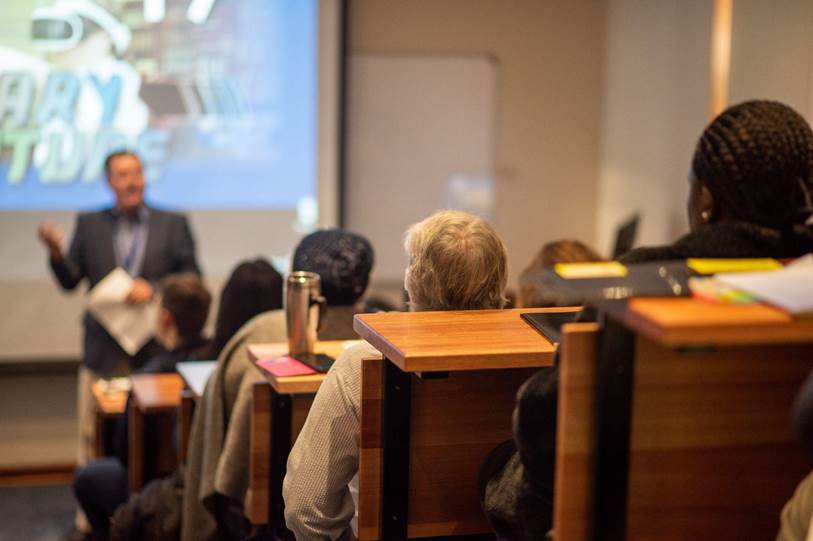
Université de Mons is located in Belgium’s Walloon region, near the French border. Though smaller in size compared to other Belgian universities, UMONS offers a well-rounded education with a strong local presence and a growing international reputation. It maintains a close-knit academic environment where students have direct access to faculty and are encouraged to take part in collaborative research early in their studies.
Academic Breadth and Faculty Structure
UMONS is organized into nine faculties and schools, covering a wide range of disciplines. These include engineering, business, architecture, medicine, education, psychology, law, and translation. Its Faculty of Engineering is among the oldest in Belgium, and its School of Interpreters is known for its language programs with European relevance. Many Master’s programs are accessible to international students and are supported with French language preparation when needed.
Teaching Approach and Support for International Students
Teaching at UMONS is highly personalized, with an emphasis on small class sizes, active student participation, and practical training. For international students, the university provides tailored support, including language assistance, integration events, and Erasmus+ opportunities. A free French course is often offered to new arrivals. Faculty members are accessible, and mentoring relationships are encouraged from the beginning of the academic year.
Campus and Student Life in Mons
The city of Mons offers a relaxed and student-friendly environment, with cultural events, affordable living, and easy transport to Brussels and France. UMONS hosts a variety of social activities throughout the year, particularly for Erasmus students. Its campus facilities include libraries, labs, cafés, and shared housing options, while the town itself features historical landmarks and green spaces for outdoor study and leisure.
What’s Available to Students
- Cultural programs and excursions organized for Erasmus and exchange students
- Free French language course
- Student clubs, social initiatives, and academic workshops
- Proximity to France and international rail links
- Cost-effective housing and low student living expenses
Sample Academic Areas (Master’s Level)
- Engineering (civil, chemical, materials)
- Architecture and Urban Planning
- Business and Economics
- Psychology and Educational Sciences
- Translation and Interpretation
- Sciences (physics, chemistry, biology)
- Law and Public Policy
Tuition Fees (International Students)
Approx. £2,000–£3,300 per year, depending on program and nationality.
UMONS students can apply for a variety of scholarships, including those from the university and independent providers. These cover merit, financial need, and mobility:
- Master Mind (Flanders Government)
- Erasmus Mundus Joint Master’s
- Scholarships for Interpreting Students (European Commission)
- Queen Elizabeth Commonwealth Awards
Application deadlines and eligibility vary, so early planning is recommended.
Research and Global Outlook
Research at UMONS addresses regional and global challenges in environmental science, technology, health, and education. With over 700 active researchers, the university leads projects in both fundamental and applied sciences. Partnerships with European institutions and local industries help students connect classroom learning with real-world applications. Interdisciplinary work is strongly encouraged, and students are often invited to participate in faculty-led projects.
4- University of Namur (UNamur)
- Location: Namur, Belgium
- Founded: 1831
- Institution Type: Private
- Global Ranking: #801 (2025)
- Total Students: 6,727
- International Students: 807
- Academic Staff: 333
- Master’s Programs: 10
- Scholarships Available: 50
- Satisfaction Score: 4.0/5

The University of Namur offers a focused and student-friendly academic environment in the capital of Wallonia. With strong roots in humanistic values and Catholic tradition, the university emphasizes ethical learning, personal attention, and interdisciplinary collaboration. Its central location in a walkable, culturally rich city gives students access to both campus life and urban convenience.
Academic Breadth and Teaching Approach
UNamur’s six faculties span law, business, sciences, humanities, computer science, and medicine. While the number of Master’s programs is smaller than larger institutions, they are well-resourced, research-linked, and structured to foster academic independence. Class sizes remain small, allowing for close contact with instructors. Study support services, such as skill-building workshops and course prep sessions, are readily available.
Campus Life and Student Experience
The campus sits in the heart of Namur, close to shops, theatres, and public transport. Students benefit from a sports hall, residence halls with shared living projects (kots à projets), and a rich mix of artistic, musical, and social activities.
What’s Available to Students
- 400+ housing units on campus
- Active student clubs and a student-run radio
- Gym and martial arts rooms, with tournaments throughout the year
- Free French integration activities
- On-campus library with over 800,000 volumes and historic archives
- Student general assembly (AGE) representing student voices
Sample Master’s Programs (Full-time, On Campus)
- Biochemistry and Molecular and Cell Biology
- Biology of Organisms and Ecology
- Chemistry
- Molecular Microbiology
Tuition Fees (International Students)
Approx. £2,000–£3,000 per year, depending on the program.
UNamur students can apply for scholarships funded by both the university and external providers. Awards support tuition, living expenses, and mobility opportunities:
- Master Mind Scholarships (Government of Flanders)
- Erasmus Mundus Joint Master’s
- Conference Interpreting Bursaries (European Commission – up to €33,600)
Deadlines vary, so applicants should start early.
Research and Global Outlook
UNamur is home to 11 research institutes and 8 shared technology platforms. Researchers work across disciplines on projects with social, environmental, and scientific relevance. While rooted in regional partnerships, the university also participates in international mobility programs and academic collaborations, offering graduate students access to funded research placements and interdisciplinary thesis options.
Belgian Universities with Global Reach
In addition to its nationally focused institutions, Belgium hosts several universities with multiple campuses or a wide international reach. These are often research-intensive, highly ranked, and connected to global academic and professional networks. For students looking for scale, diversity, or broad access to global resources, these schools provide strong options.

KU Leuven
Consistently ranked among the top 100 globally, KU Leuven is Belgium’s largest university. It offers a wide range of programs across science, technology, law, and the humanities. While based in Leuven, it has satellite campuses in other parts of Belgium.
Why KU Leuven
- Top-ranked globally (#59 in 2025)
- Major research output and global partnerships
- Large selection of English-taught Master’s programs
Ghent University
Located primarily in Ghent, this university is strong in life sciences, engineering, and social sciences. It has a strong reputation for interdisciplinary research and international student inclusion.
Why Ghent University
- Ranked among the top 150 worldwide
- Comprehensive academic offerings
- Solid infrastructure for international PhD students
University of Antwerp
With a strong research culture and modern campus environment, the University of Antwerp is known for programs in economics, business, and biomedical sciences. It maintains close ties with industry and public institutions.
Why the University of Antwerp
- Located in one of Belgium’s major urban centers
- English-taught programs in key academic fields
- Focus on innovation and applied research
Hasselt University
A younger university with growing recognition, Hasselt University focuses on life sciences, mobility, and ICT. It offers English-taught Master’s programs and encourages student-centered teaching.
Why Hasselt University
- Compact campus with smaller class sizes
- Emphasis on future-focused research areas
- Accessible to students looking for a low-cost setting
How to Apply to Belgian Universities: A Step-by-Step Guide
If you are planning on attending any of these universities, then this is what you must do:
Step 1: Choose a Program
Visit the official website of your chosen university and select a program that accepts international applicants. Make sure it is taught in a language you are comfortable with (usually English, French, or Dutch).
Step 2: Prepare Your Documents
You will typically need:
- A valid passport
- Academic transcripts
- Proof of language proficiency (IELTS, TOEFL, or DELF)
- A motivation letter
- Sometimes a CV or reference letters
- GRE/GMAT scores (if required by the program)
Step 3: Submit Your Application
Apply through the university’s online portal before the posted deadline. Some universities offer pre-screening tools or webinars for international students.
Step 4: Apply for a Student Visa (Non-EU Students)
Once admitted, apply for a student visa and a Belgian residence permit. You will need:
- Proof of admission
- Proof of financial means (about €666/month)
- Health insurance
- Criminal background check (if over 21)
Step 5: Arrange Housing and Register Locally
After arrival, register with your local commune and confirm housing. EU students must also register, but do not need a visa.
Conclusion
Belgium’s universities provide access to academic communities that value critical thinking, international exchange, and practical learning. For students ready to engage with new languages, systems, and ideas, studying in Belgium is a chance to build both knowledge and perspective. The real value lies not just in where you study, but in how you apply what you have learned, and Belgium is a place where that process can begin with purpose.

